- June 1, 2025
- Posted by: Forex Wiki Team
- Category: Free Forex Indicators

Introduction
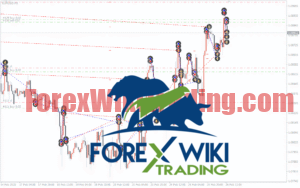
The ClusterPath Indicator represents a paradigm shift in technical analysis, leveraging rolling K-means clustering algorithms to transform raw price data into actionable trend channels. Unlike traditional indicators, this machine-learning-powered tool dynamically groups price points into clusters, generating three critical zones: Upper (resistance), Average (median), and Lower (support). These zones adapt in real-time to market volatility, offering a statistically robust framework for trend identification.
Technical Specifications
Version: 1
Year of issue: 2025
Working pairs: Any
Recommended timeframe: Any
Minimum Deposit: $500
Average of account: 1:30 To 1:1000
Best Brokers List
ClusterPath Indicator System works with any broker and any type of account, but we recommend our clients use one of the top forex brokers listed below:
[ninja_tables id=”26339″]
GoldSecure EA Settings

Core Mechanics: How ClusterPath Indicator Decode Market Structure
Cluster-Based Extremities
-
Trend Direction Signals: Price breaching the Upper zone indicates a bullish trend, while breaking the Lower zone signals bearish momentum.
-
Cluster Sensitivity: Higher “Clusters” settings (e.g., 10 vs. 3) widen channel extremities, demanding stronger price momentum for breakouts.
-
Dispersion Insight: Wider zones around centroids reflect higher cluster volatility, hinting at potential reversal points when price enters these areas.
Algorithmic Workflow:
-
Data Segmentation: Analyzes the last
Window Sizeprices (e.g., 30 bars). -
Centroid Calculation: Identifies
Clusters(user-defined) and computes their price centroids. -
Noise Reduction: “Denoise Channels” smoothes extremities for cleaner trend alignment.
Strategic Applications: Trading with ClusterPath Indicator
Trend Confirmation System
-
Uptrend Trigger: Close above Upper zone + rising Average zone → confirms bullish bias.
-
Downtrend Validation: Close below Lower zone + declining Average zone → reinforces bearish outlook.
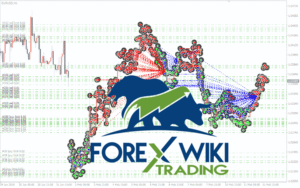
(Example: AMD chart showed 15 clusters highlighting precise reversal zones near $134 and $116.)
Trailing Stop Function
When enabled, the indicator dynamically adjusts stop levels:
-
Long Trades: Lower zone acts as exit point.
-
Short Trades: Upper zone serves as profit target.
Critical Settings: Optimizing Performance vs. Precision


| Setting | Impact | Optimization Tip |
|---|---|---|
| Window Size | Larger values (e.g., 50) suit long-term trends; smaller (e.g., 15) for scalping. | Match to your trading timeframe. |
| Clusters | Higher values reduce false breakouts but delay signals. | Start at 5-7 for balanced sensitivity. |
| Denoise Channels | Enabled = smoother trends; Disabled = raw centroid accuracy. | Enable for volatile pairs like GBP/JPY. |
| Historical Bars | Values >5,000 increase accuracy but slow processing. | Reduce to 1,000 for faster backtests. |
Computational Trade-Offs: Speed vs. Accuracy
The K-means algorithm’s complexity introduces performance constraints:
-
Maximum Iteration Steps: Lower values (e.g., 100) speed up calculations but risk inaccurate clusters.
-
Historical Bars Calculation: Larger datasets improve statistical significance at the cost of latency.
Pro Tip: Use default settings (500 iterations, 5,000 bars) for swing trading; reduce for day trading.
✅ Advantages of ClusterPath Indicator
-
Adaptive to Regime Shifts: Excels in detecting trend reversals during volatile events (e.g., NFP releases).
-
Noise Reduction: “Denoise” setting filters market whipsaw, ideal for ranging markets.
-
Visual Clarity: Color-coded zones (Teal/Orange/Red) simplify multi-timeframe analysis.
❌ Limitations of ClusterPath Indicator
-
Lag Risk: Cluster recalculation delays signals during flash crashes.
-
Overfitting Danger: Excessive clusters (>10) may curve-fit historical data.
-
Resource-Intensive: Requires robust hardware for real-time analysis with large datasets.
Conclusion
The ClusterPath Indicator bridges machine learning and practical trading, offering a statistically rigorous approach to trend identification. Its customizable clustering provides unparalleled adaptability across forex pairs and timeframes. However, traders must navigate its computational demands and avoid arbitrary parameter tweaking. While not a standalone “holy grail,” it delivers exceptional value as a confluence tool—especially when paired with volume or momentum oscillators. As algorithmic trading evolves, such tools underscore how quantitative methods are democratizing market edge.